The offer price is dinner conversation. Net is the wire.
Educational overview. Not individualized financial, legal, or tax advice. How we source and check numbers.
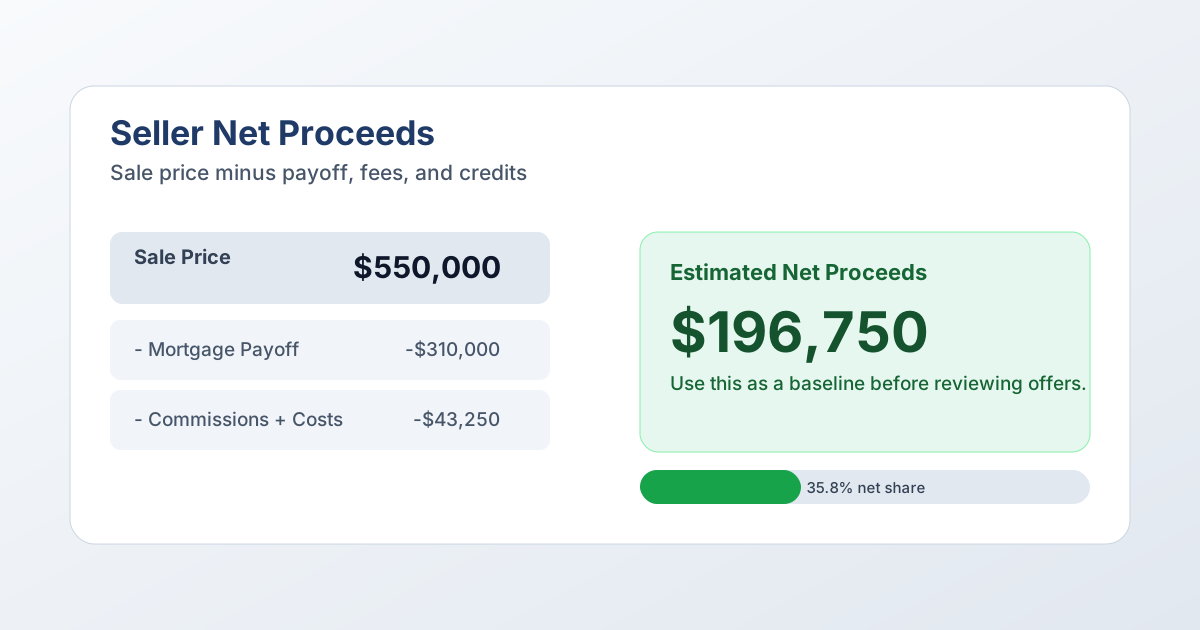
The offer price is the number everyone repeats. The number that hits your account is what is left after the payoff, the commission, the credits you agreed to, and the closing bill. That gap surprises people every weekend, usually because they started from a listing estimate instead of a written payoff.
Net proceeds equal sale price minus mortgage payoff, commissions, seller concessions, repair credits, closing costs, and other liens. Model it in the seller net sheet before you list, and again for every offer.
A $425,000 contract that is not $425,000
Contract price $425,000. Mortgage payoff $268,000. Agent commission 5.5 percent is $23,375. Seller credit to the buyer $8,000. Repair credit $3,500. Title, transfer, and seller closing charges $4,200. Estimated net: 425,000 minus 268,000 minus 23,375 minus 8,000 minus 3,500 minus 4,200, or about $117,925 before prorations, HOA dues, or wire fees. A $10,000 price change or an extra 1 percent concession moves net by roughly that full amount. Small contract terms swing real cash.
| Line | Amount |
|---|---|
| Contract price | $425,000 |
| Mortgage payoff | $268,000 |
| Commission at 5.5% | $23,375 |
| Buyer credit + repair credit | $11,500 |
| Title, transfer, seller charges | $4,200 |
| Estimated net | About $117,925 |
A Zillow estimate is not net proceeds. Capital gains tax is also not this sheet. Gain depends on basis, improvements, selling expenses, and the exclusion rules for a primary residence. That is a CPA question. Proceeds are usually wired within a few business days after recording.
Payoff, commission, and the credits that did not exist at list
The payoff is the biggest number and the one sellers most often get wrong. Your last monthly statement shows a balance, not a payoff. A payoff quote adds interest accrued to the actual closing date, because mortgage interest is charged in arrears and accumulates daily, plus recording and reconveyance fees. Push the closing out a week and the figure changes. It also has to cover every lien, not just the first mortgage. A home equity line you opened during a renovation still has to be closed at settlement. So do unpaid HOA assessments, contractor liens, and any tax lien. Sellers who discover a forgotten $40,000 HELOC in week four of escrow have usually already offered on the next house based on a number that was never real. Call the servicer when you decide to list. Ask for a written payoff and the per-diem. Then check for a second lien rather than assuming there is none.
At 5.5 percent on a $425,000 sale, commission is $23,375. That is more than most sellers spend on every other part of the transaction combined, and it is the most negotiable item on the sheet. Since the 2024 changes to how buyer agent compensation is handled, the structure is genuinely open: what you agree to in the listing agreement is what you pay, and offers can specify buyer-side compensation differently. Shaving half a percent is $2,125 on this sale. A full-service listing with real market presence can produce more than half a point of extra price. A discount arrangement that leaves the house poorly presented can cost more than it saves. Decide deliberately.
The $8,000 seller credit and $3,500 repair credit in the example did not exist when the house went on the market. Both got negotiated after inspection, which means your net is not final when you accept an offer. Planning as though credits will be zero is how sellers revise their next purchase budget in week five. A buyer who asks for $10,000 off the price saves roughly $65 a month at recent rates. That same $10,000 toward a rate buydown or their closing costs can be worth more to them in monthly terms. Loan programs cap seller contributions. The buyer's lender has to confirm the structure before you agree. Decide your concession ceiling before you list so the post-inspection conversation is arithmetic, not an argument at 9 p.m.
Model the sale before the first offer arrives
Run high, mid, and low sale prices with different commission and concession assumptions. Sellers who net-sheet before listing negotiate from cash impact, not ego price. When comparing offers, use the seller offer comparison so credits and timeline risk sit on the same page as price. Keep a one-page net sheet for every offer round. Consistency beats gut feel under a deadline.
You can estimate net before any offer arrives: pick a planning price range and realistic state costs in the seller net sheet. Then read how to compare offers so the highest price is not the only ranking you use.
A payoff quote is not the statement balance
Call the servicer when you decide to list, not the week before closing. Ask for a written payoff good through a specific date and the per-diem interest after that date. Mortgage interest is charged in arrears, so the figure on last month's statement is already stale. Push the closing out ten days and the payoff rises by ten days of interest plus any recording or reconveyance fee the servicer adds. Put that per-diem on the net sheet so a delayed buyer does not quietly spend your proceeds.
Then look for every other lien. A home equity line you opened for a kitchen and then forgot still has to be closed, even if the balance is small, because the title company will not record a sale with it open. Unpaid HOA assessments, a contractor lien, and a tax lien come out of the same wire. Sellers who discover a forgotten $40,000 line in week four have usually already written an offer on the next house using a number that was never real. The statement for the first mortgage is not a title search.
Commission is the other line worth pricing before you list. At 5 to 6 percent it is often larger than transfer tax, title, and credits combined. Since buyer-agent compensation became more negotiable, the listing agreement is the document that sets what you pay, and individual offers can propose something different. Shaving half a point is real money. So is a weak listing that costs you more than half a point in price. Decide the structure on purpose, then run high, mid, and low prices in the seller net sheet with that commission held constant so you can see the cash, not the ego price.
Two public references keep the estimate honest. The fee categories a closing disclosure is built from are listed by the Consumer Financial Protection Bureau. Federal tax on gain from a main home, when it applies at all, is IRS Tax Topic 701, and it is not calculated on this page. The payoff figure still has to come from your servicer in writing. A statement balance is not that letter.