Rank offers by cash and certainty, not by the number on the first line
Educational overview. Not individualized financial, legal, or tax advice. How we source and check numbers.
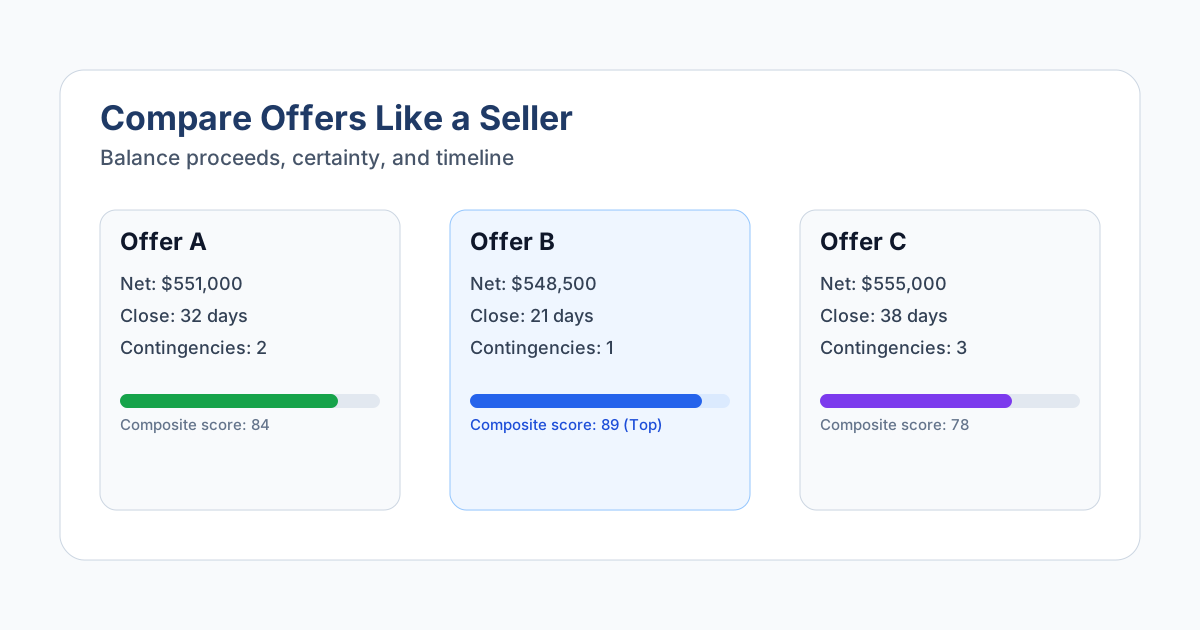
The highest price on the stack can still be the offer you regret. Look at what you would actually net, how likely the buyer is to get to the closing table, and whether the date works with the house you are trying to buy next.
Four things decide it: net proceeds after seller-paid costs and credits, financing strength, the contingency stack, and a close date that matches your move. Run every envelope through the seller offer comparison workspace and the net sheet before you start arguing about pride.
Three envelopes on a $400,000 list
Offer A: $410,000, 3 percent seller credit ($12,300), conventional 20 percent down, 21-day close, inspection contingency. Offer B: $405,000, no credit, VA loan, 30-day close, inspection and appraisal. Offer C: $415,000, 10 percent down conventional, $5,000 credit, 45-day close, buyer must sell their current home.
Headline winner is C at $415,000. After credits, C leaves $410,000 before commission. A leaves $397,700. B leaves $405,000. Apply 5.5 percent commission to each contract price and the cash ranking becomes C, then B, then A, which is not the order you would guess from looking at the credits alone. A buyer asking for a large credit is bidding lower while presenting a higher number, and the higher number is the one that gets repeated. Commission also scales with contract price, so part of any price increase goes straight back out. You cannot rank offers until every one of them is converted to net.
| Offer | Price after credit | The risk you are buying |
|---|---|---|
| A: $410,000, $12,300 credit | $397,700 | Strong down payment, short close, inspection still live |
| B: $405,000, no credit | $405,000 | VA appraisal and property standards |
| C: $415,000, $5,000 credit | $410,000 | Home-sale contingency, 45 days, thinner equity |
Financing is a prediction. Contingencies are exit ramps.
What you are asking when you look at financing is whether you will still be in contract in six weeks. Cash with verified proof of funds is strongest because there is no lender to disappoint. A conventional loan with 20 percent down and full underwriting approval is close behind: the equity cushion means a slightly low appraisal does not necessarily break the deal. Low down payment financing is more appraisal-sensitive. With 10 percent down, as in Offer C, there is less room between the loan amount and the appraised value. FHA and VA loans are sound and should not be dismissed out of hand, but both involve property condition standards that can require repairs, and VA appraisals run on their own schedule.
The paperwork matters more than the loan type. A full underwriting approval with verified income and assets is substantially stronger than a pre-qualification letter from a phone conversation. The two documents can look similar. Ask which one is attached, and whether the buyer's lender answers the phone. Cash is usually faster, but verify proof of funds. Some cash buyers still want an inspection. An escalation clause says the buyer will beat other offers up to a cap. Know how competing offers get proven and what the net looks like after the price rises.
Every contingency is a condition under which the buyer can renegotiate or leave. An inspection contingency is standard. An offer that waives it is not automatically better. A buyer who waives inspection and then discovers a failing foundation may walk and accept the loss of earnest money, which leaves you back on the market. The home-sale contingency on Offer C ties your closing to a transaction you cannot see. If you accept it, ask for a kick-out clause that lets you keep marketing and accept a better offer with short notice. Shortened contingency periods are often worth more than waivers. A five-day inspection window instead of fifteen moves you to certainty ten days sooner. Counter the highest offer on terms even when the price looks strong: credit, close date, and contingency limits. Counter from net, not pride.
What a failed deal actually costs
If a deal collapses in week four, you have not lost four weeks. The listing returns carrying visible days on market and a price history. Buyers read a relisted home as a home with a problem even when the problem was the other buyer's financing. In a slower market that perception can cost more than the entire gap between your top two offers. You also keep paying while you wait: mortgage, taxes, insurance, utilities, and sometimes two houses if you have already committed elsewhere. Before you accept the riskiest high offer, work out what two extra months of carry plus a $10,000 price reduction would cost, and compare that with the few thousand dollars of extra price you are reaching for.
Score each offer the same way: estimated net, then subtract for weak financing, heavy contingencies, and a long or uncertain close; add for a large down payment, a local lender with a track record, and a date that matches your next purchase. Keep a one-page sheet every round. Sellers who score consistently decide better under deadline pressure. The net math underneath is in seller net proceeds.
Score the stack before you counter
Convert every offer to net before you talk about who "won." Price minus seller credits, then commission, which scales with the contract price, so part of a higher number leaves again. On the three-envelope illustration, the headline order and the cash order were not the same. That reshuffle is normal. A large credit is a lower bid wearing a higher price.
Then price the failure. A deal that dies in week four does not cost four weeks. The listing returns with days on market and a price history, and the next buyer reads that as a problem even when the problem was financing. Add the carry: mortgage, tax, insurance, and sometimes two houses. Compare that cost with the few thousand dollars you are reaching for on the fragile high offer. Financing strength is a prediction about whether you will still be in contract. Cash with verified funds is strongest. A 20 percent conventional file with a full underwrite is close. A home-sale contingency ties you to a transaction you cannot see. If you accept one, ask for a kick-out so you can keep marketing.
Counter from net. Credit, close date, and contingency length are often worth more than another small price bump. When the envelopes are in, run them through the offer comparison workspace and the net sheet so the argument is about cash and certainty.
Financing strength is a prediction about a buyer you have not underwritten. What you can check is whether their deposit and their contingencies are written down. The Consumer Financial Protection Bureau explains earnest money as the deposit that shows the offer is serious, and it explains the Loan Estimate as the document that shows whether a financed buyer has a real price, not a conversation. Ask to see both before you treat a high number as cash.