PMI is a bridge payment, not a penalty for buying too soon
Educational overview. Not individualized financial, legal, or tax advice. How we source and check numbers.

Private mortgage insurance is the monthly charge most conventional lenders add when you put less than 20 percent down. It protects the lender if you default, not you. It can still be the difference between buying now with a reserve in the bank and waiting years to save a full 20 percent while you keep paying rent.
PMI is not FHA mortgage insurance, a VA funding fee, or a USDA guarantee fee. Those programs have their own premiums and their own end dates. If you are comparing FHA and conventional, run both files. The insurance cost and the removal rules are different products wearing similar names.
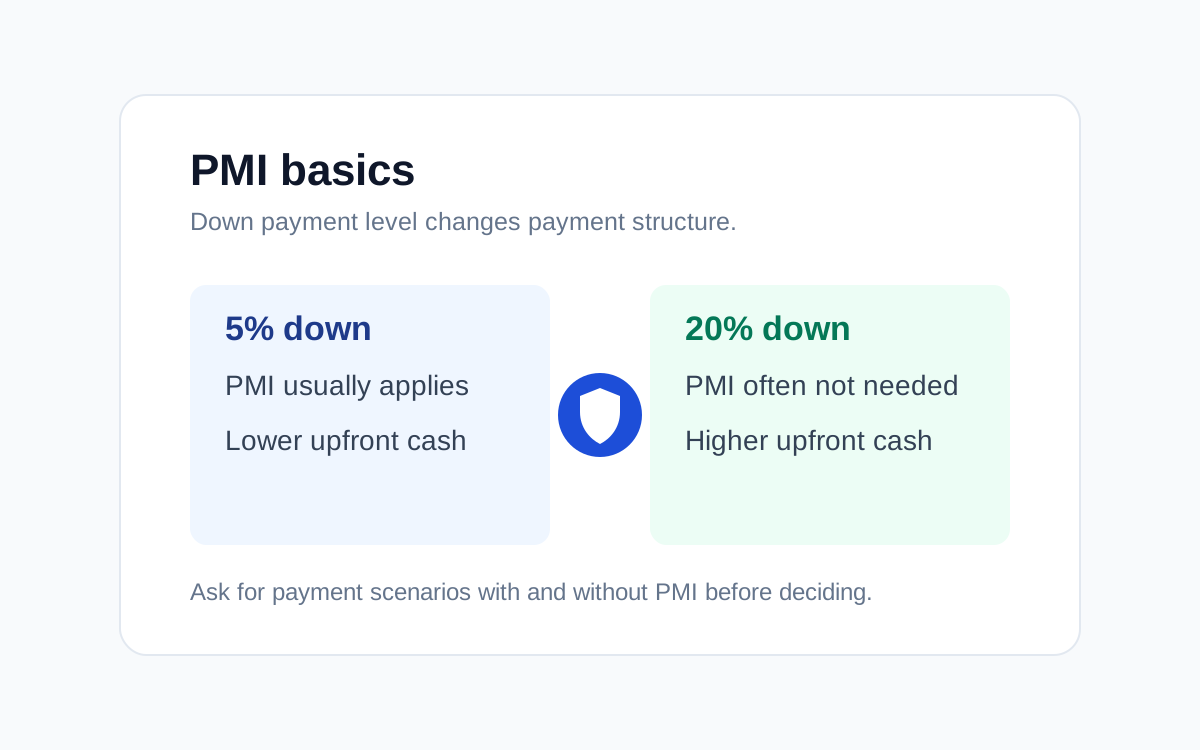
What the premium actually adds to a payment
Lenders require PMI when loan-to-value at closing is above 80 percent because they have less equity cushion if the house must be sold after default. Premiums move with credit score, occupancy, term, and loan size. A primary residence prices better than a second home or an investment property. Two quotes on the same house can disagree because one file is 720 credit and 10 percent down and the other is 680 credit and 5 percent down. The rate sheet is not being inconsistent. It is pricing different risk.
On a $350,000 house with 5 percent down, the loan is $332,500. At 6.75 percent, principal and interest is about $2,155. PMI in that loan-to-value and credit band often adds something like $120 to $220 a month. The housing number before taxes and insurance is then in the $2,275 to $2,375 range. Ten percent down usually prices cheaper. Twenty percent down on a conventional loan means no borrower-paid PMI at origination.
| Down payment | Loan amount | P&I plus typical PMI |
|---|---|---|
| 5 percent ($17,500) | $332,500 | About $2,275 to $2,375 |
| 10 percent ($35,000) | $315,000 | Lower PMI, still present |
| 20 percent ($70,000) | $280,000 | No borrower-paid PMI at start |
Paying PMI on purpose can still be the right trade. You keep cash for reserves, moving, and the first repair. Rent in your market may already exceed ownership even with the premium. You may reach the removal thresholds sooner than the five to ten years many buyers assume if you send extra principal or the house appreciates. The test is whether the all-in payment still fits a month you would recognize, not the approval maximum.
Waiting to save 20 percent has a cost too: more rent, and a price that may not sit still. In a cheap rental market, waiting can win. In a tight one, a few years of PMI is often cheaper than the rent you would have paid. Put five to seven years of PMI on one side of a notepad. Put the rent you would pay while you save, and the equity you would not be building, on the other. Your city and your savings rate decide it. Use the mortgage calculator and budget planner with PMI turned on if the lender gives you an estimate.
Cancellation under the Homeowners Protection Act
The Homeowners Protection Act sets baseline rules for borrower-paid PMI on many residential mortgages. Automatic termination generally arrives when the loan balance is scheduled to reach 78 percent of the original value, if you are current. You may request cancellation when the balance reaches 80 percent of the original value, if you meet the servicer's conditions: good payment history, no junior liens, and sometimes an appraisal. Some lenders allow earlier removal if an appraisal shows enough equity. Policies vary. Refinancing into a new loan at 80 percent LTV or below is another path if rates and costs work.
Those percentages are measured against original value unless the servicer agrees to use a new appraisal. A website that says you have 20 percent equity because Zillow moved is not a cancellation date. Ask the servicer when the scheduled balance hits 80 percent and 78 percent of the original value. Lender-paid PMI, which is built into a higher rate, follows different cancellation rules. Ask which structure you were quoted.
Tax treatment of PMI has changed over the years. Do not assume a deduction. Some buyers skip monthly PMI with a piggyback second mortgage (80/10/10). That second loan has its own rate. Eligible veterans can use a VA loan instead. FHA uses MIP, a different product that often lasts longer. PMI does not cover you if you lose your job. It protects the lender. Many buyers pay it for five to ten years. Extra principal and appreciation can shorten that.
Before you pick a down payment, ask the lender for three payments and get the removal rules in writing. Then read the first-time buyer sequence and DTI guide so the payment and the approval limit stay on the same page.
Borrower-paid, lender-paid, and the FHA product people confuse with both
Borrower-paid PMI is the monthly premium most people mean. The Homeowners Protection Act gives you a request path near 80 percent of original value and an automatic end near 78 percent, if you are current and the loan qualifies. Lender-paid PMI removes the monthly line by charging a higher note rate instead. Cancellation works differently, often not at all, because the higher rate is the price of the insurance for as long as you keep that note. Ask which structure is on the Loan Estimate before you celebrate a payment with no PMI line.
FHA mortgage insurance is a separate product. The upfront premium and the annual premium follow FHA rules, and on many loans the annual piece lasts longer than conventional PMI. A VA funding fee and a USDA guarantee fee are different again. Comparing a conventional payment with PMI to an FHA payment with MIP on the same house, same down payment, and same credit is the only honest way to choose. The cheaper start rate can lose once you count how long the insurance actually stays.
Paying PMI on purpose can still beat waiting. The cost of waiting is rent, and a price that may not sit still, and the equity you are not building. Put five to seven years of the premium on one side. Put the rent you would pay while you save the rest of a 20 percent down payment on the other. In a cheap rental market, waiting can win. In a tight one, a few years of PMI is often the smaller bill. The test is whether the all-in payment, premium included, still fits a month you would recognize. That payment belongs in the mortgage calculator and next to the DTI guide, because the approval maximum is not the same test.
Sources: CFPB on PMI, Homeowners Protection Act (12 U.S.C. Chapter 49). Educational only.